Enforce downscoping in token exchange for agent-to-agent calls
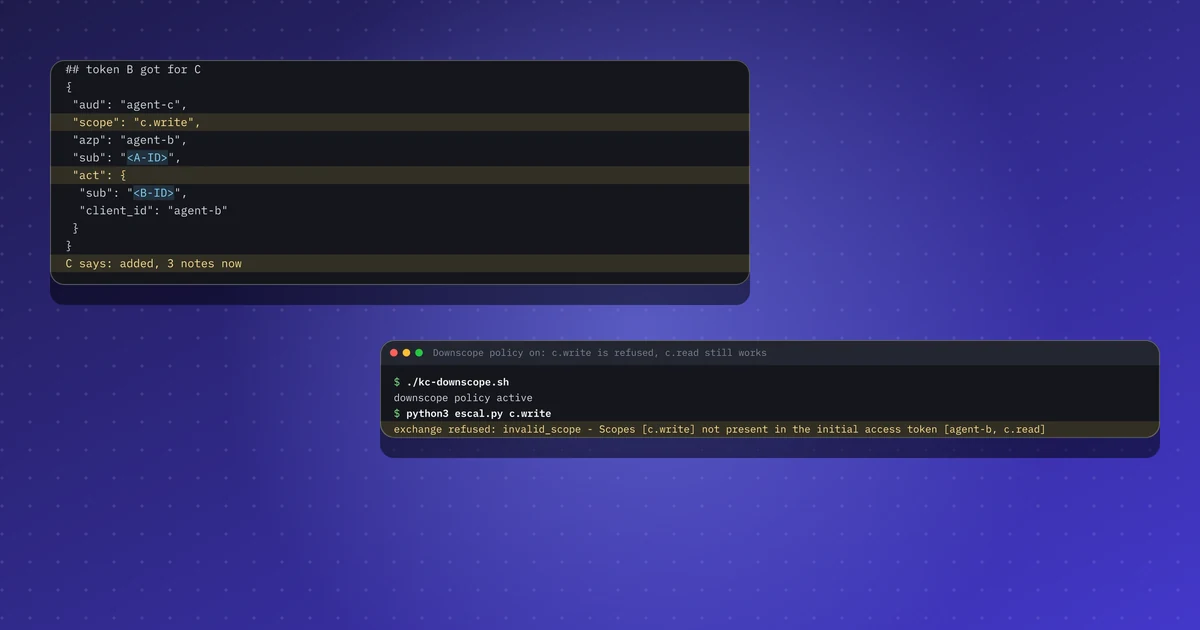
A Keycloak lab for A2A agents: the token B gets for C follows B's own scopes, not A's, unless you enforce downscoping. Stock run, control run and the fix.
Paste a token and a key to decode the claims and verify the signature. I use this instead of pasting tokens into a site I do not control.
Runs in your browser. Nothing you paste is sent anywhere. Don't paste production private keys.
The page makes no network request while you work. The only exceptions are the buttons that say Fetch, which call the address you type. Keep real private keys out of any web page, including this one.
Use a test account and throwaway keys. Do not paste production secrets, session cookies or real users' tokens.
A compact JWT (three base64url parts). To verify the signature, also paste an HMAC secret, a PEM public key, a JWK or a JWKS. Prefer expired or test tokens.
Samples are made with throwaway keys and example.test names. They mean nothing outside this page.
A compact JWT (three base64url parts). To verify the signature, also paste an HMAC secret, a PEM public key, a JWK or a JWKS. Prefer expired or test tokens.
Paste the token, then the HMAC secret, a PEM public key, a JWK or a JWKS. The page checks the algorithm and the signature and warns about weak setups such as alg none.
No. Decoding and verification run in your browser, and the page makes no request while you work. Still, prefer expired or test tokens.
The newest posts and labs on the same topic, picked automatically.
A Keycloak lab for A2A agents: the token B gets for C follows B's own scopes, not A's, unless you enforce downscoping. Stock run, control run and the fix.
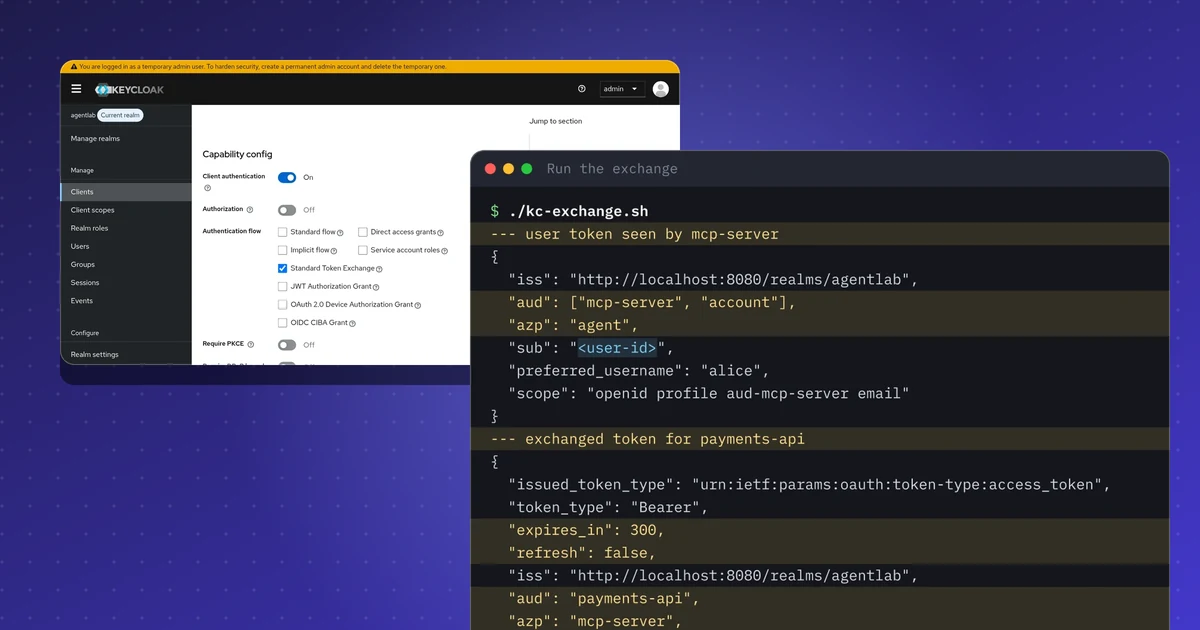
A hands-on lab with Keycloak: an MCP server exchanges a user's token for a narrower one for a downstream API, then three bad exchanges are refused.
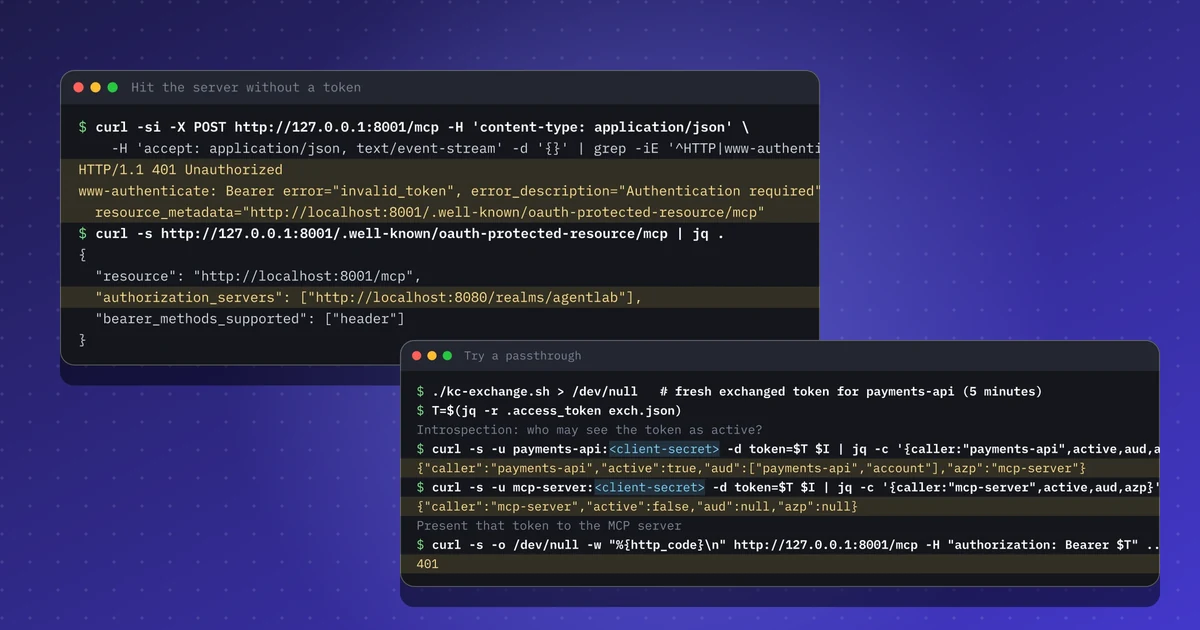
A lab with the official MCP Python SDK and Keycloak: the 401 handshake, audience checks, an RFC 8693 exchange for the payments API, and a refused passthrough.