TL;DR
- On 17 November 2026 two poisoned versions of Microsoft Agent Framework, a toolkit for building AI agents, were published to the public Python registry. They stole stored keys and asked the cloud for fresh access tokens in the name of the machine they ran on.
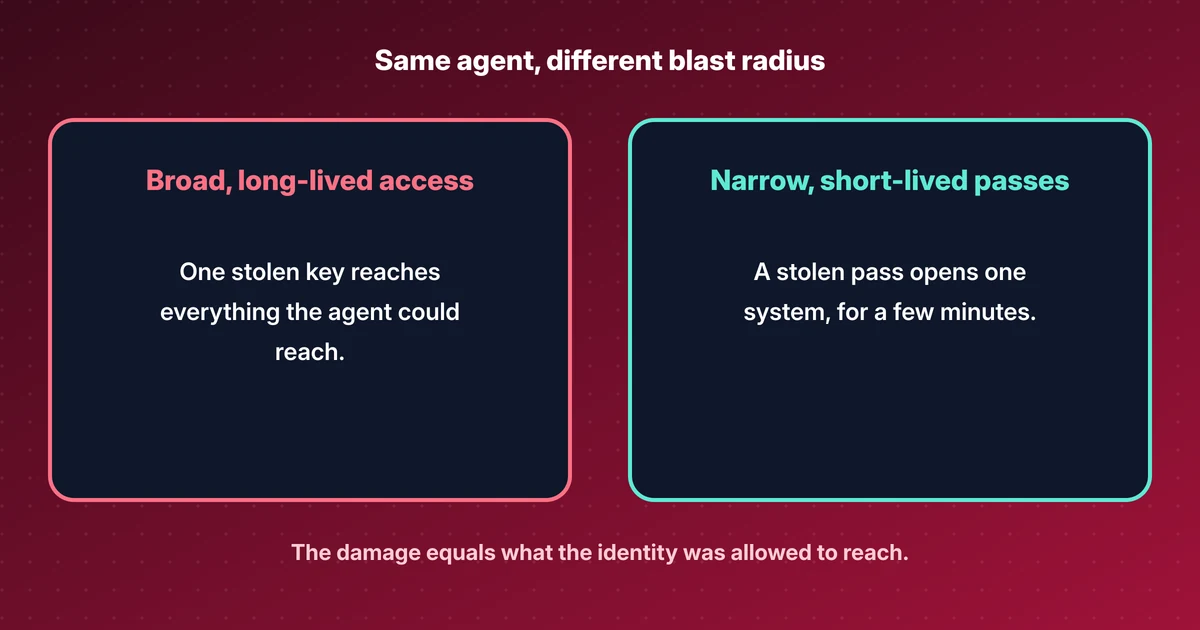
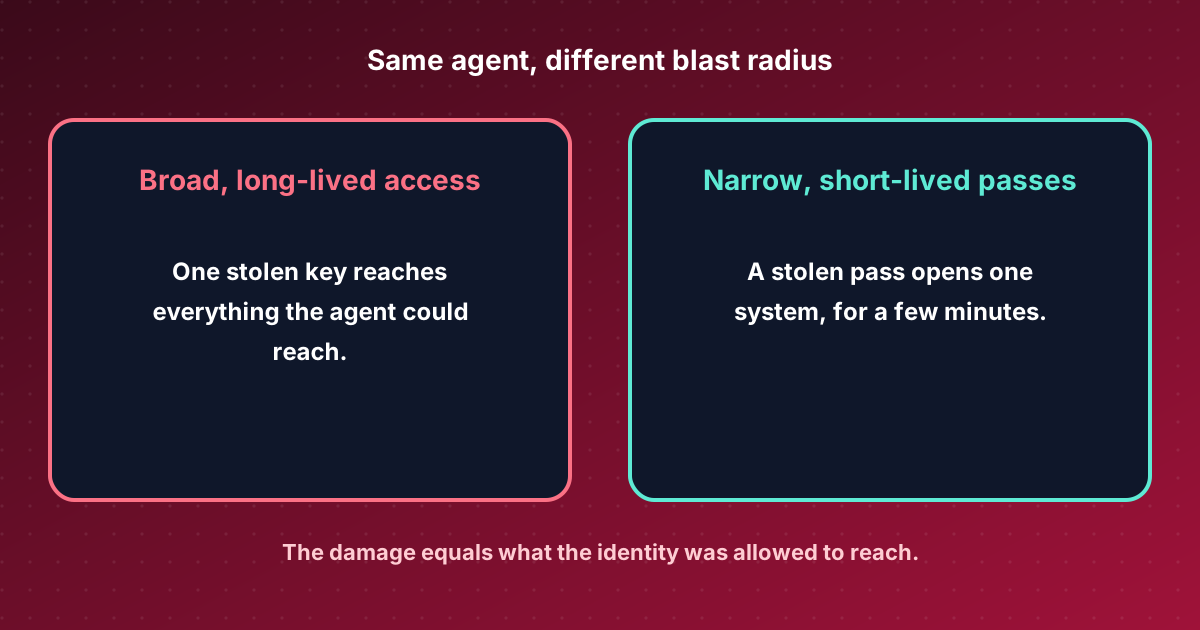
- The damage from an incident like this equals what the stolen identities were allowed to reach. Agents tend to get broad access, because their job is to connect systems.
- An agent that signs in as a person, or through a shared account, leaves no separate trail and has no separate off switch. An agent with its own identity and short-lived, narrow passes limits both problems.
- The article ends with five questions a manager can ask the IT or security team this quarter, without needing to know how tokens work.
A contact in business development asked me for a version of this topic without the jargon. Here it is. I start with something that happened this week, because it explains the point better than any definition.
What happened on 17 November#
On the evening of 17 November 2026, someone published two poisoned versions of Microsoft Agent Framework to PyPI, the public registry where Python developers download code. Agent Framework is Microsoft’s open-source toolkit for building AI agents. BleepingComputer puts it at roughly 200,000 downloads a month.
The bad versions, 1.26.1 and 1.26.2, went up at 21:35 and 22:08 Zurich time. PyPI pulled each one within about half an hour. That sounds fast. It is still enough time for an automated build system to install a fresh release without anyone looking.
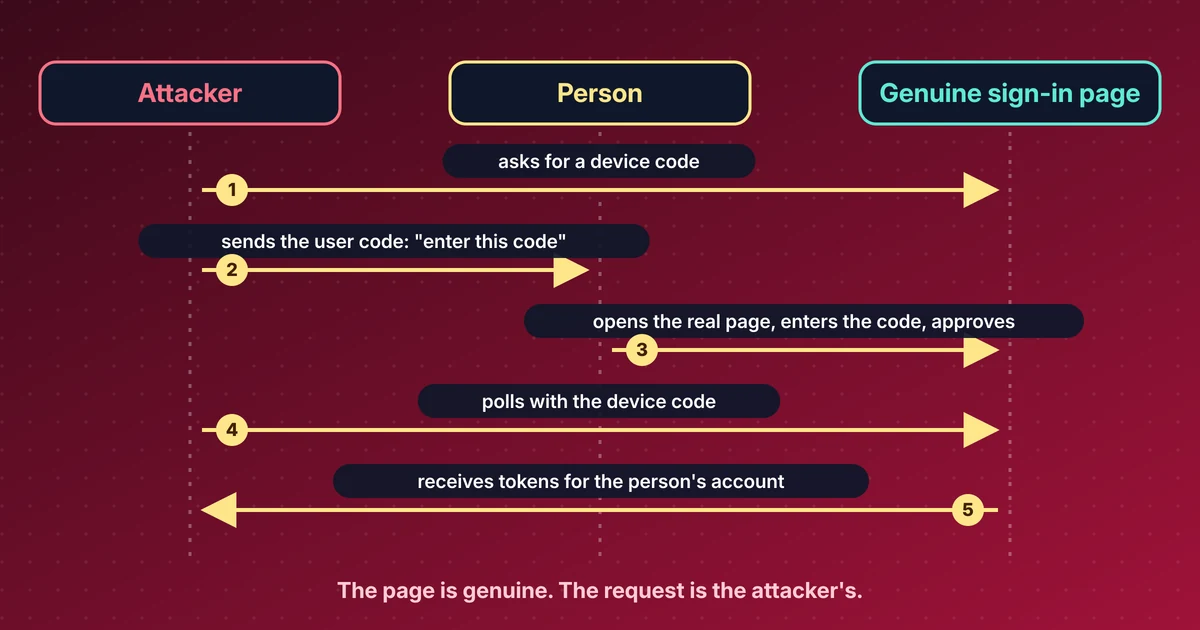
The framework kept working, so nothing looked broken. In the background, the code collected passwords and keys stored on the machine and sent them to a web address the attacker controlled. On Azure machines and in build pipelines, it also asked the cloud for fresh access tokens in the name of the machine it was running on. Wiz Research says the attacker appears to have published the package with a stolen certificate belonging to Microsoft’s own release pipeline. How that certificate was obtained is not known yet.
I read this as an identity story from start to finish. A stolen machine credential appears to have let the attacker in. Machine credentials were what the attacker took out.
What identity means at work#
Identity and access management, IAM for short, answers two questions every time something touches a company system. Who is this, and what is it allowed to do? A third question comes later, during an audit or an incident: can we prove who did what?
For people, you know the routine. You sign in, maybe approve a prompt on your phone, and you get access that matches your job. When you leave, IT switches the account off.
Software needs the same thing. A billing app that reads the customer database has an identity too. It does not type a password. It holds a key or a certificate, or the cloud vouches for it. These are called non-human identities, and in most companies they already outnumber the staff.
Where an AI agent fits#
An agent sits between the two. It runs like software, but it does work a person asked for, often with that person’s access. Picture a sales assistant that reads your customer records, drafts an offer and books the follow-up meeting.
The real question is whose identity the agent uses. I see three common answers.
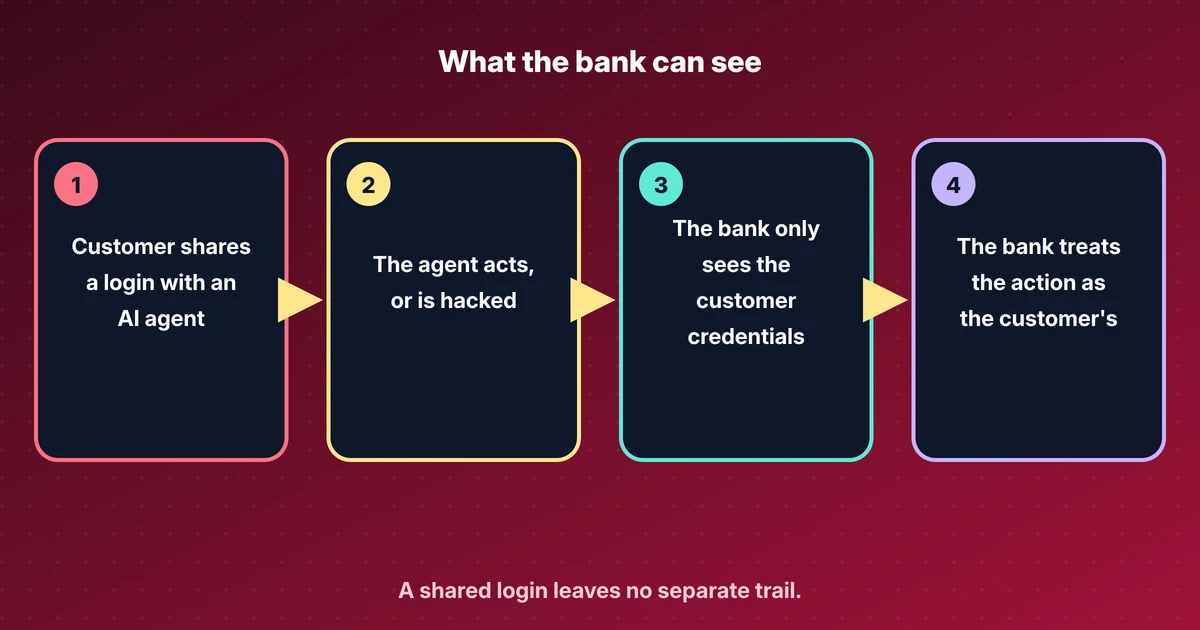
- It signs in as you. Easy to set up, and bad for audits. Every action looks like yours. If the agent misbehaves, the only off switch is your password.
- It uses a shared service account with broad rights. Also easy. One stolen key then opens everything that account can reach.
- It has an identity of its own, linked to the person it works for. More work up front. This is where the identity vendors are heading.
What happens when an agent acts for you#
Think of a hotel key card. Reception does not give the cleaning staff the master key. Each card opens certain rooms for one shift, and the lock records which card opened the door. If a card goes missing, reception cancels that one card and nobody else is affected.
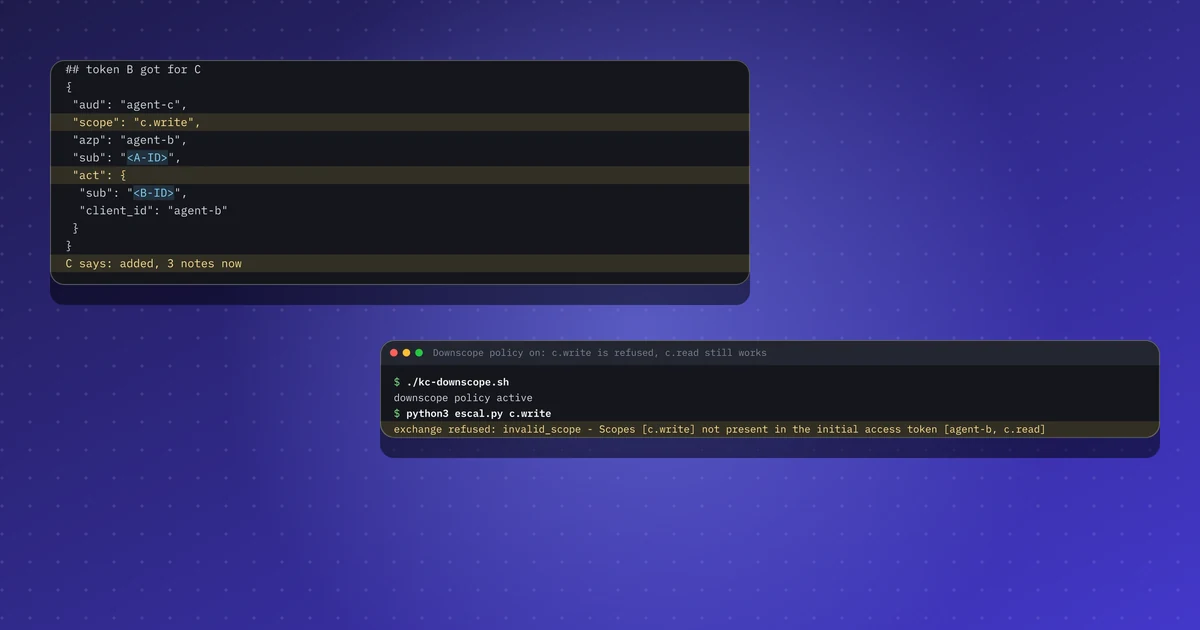
The real mechanism is close to that. When an agent needs to read your calendar, it asks the company’s identity system for a token. A token is a small, digitally signed pass. It says which agent is asking, which person it works for, which system it may call and what it may do there. It usually expires within minutes or an hour. The calendar system checks the signature and the expiry before it answers. If the pass says “read”, a request to delete something is refused.
Two details matter for a manager. A short expiry limits how long a stolen pass is useful. A pass that names both the agent and the person means the log shows “agent X, on behalf of Anna”, and not only “Anna”.
Why the Agent Framework case matters to you#
The poisoned code did not have to break any lock. It ran inside machines that already had identities, and it asked the cloud for tokens in their name. The cloud handed them over, because from its point of view the request came from the right machine.
So the damage equals what those identities were allowed to reach. A build machine that can only publish one app puts one app at risk. A build machine with rights over the whole cloud account puts the whole account at risk. Security people call this the blast radius.
Agents raise the stakes. Their job is to connect systems, so they tend to collect access to many of them. The code behind them also changes often: Agent Framework had shipped a normal release on 12 November, five days before the bad one. An agent that runs with broad, long-lived access turns one bad update into a problem for every system it can touch.
What good looks like#
The vendors are moving. On 19 November 2026, Okta described issuing a short-lived, narrow token for each connection an agent’s tools make to back-end systems, in place of shared static keys, so that each action ties back to the person and the agent. On 17 November, at its Ignite conference, Microsoft said more agents can get their own Microsoft Entra Agent ID, and that a default policy disables agent identities that have been inactive for 60 days. Several of those Microsoft features are still in preview.
A product feature only helps if someone switches it on and gives each agent narrow rights from day one. That part is a decision, not a purchase.
Five questions to ask your IT or security team#
- Which AI agents already have access to our systems, including tools people installed on their own laptops?
- When an agent acts, whose identity does it use: the employee’s, a shared account, or one of its own?
- If one agent is compromised, what could it reach, and can we switch off that agent without locking out the person it works for?
- How long do the agents’ access passes last, and are any passwords or keys sitting unencrypted in their settings?
- Would our logs show that an agent made a change, and on whose behalf?
You do not need the answers to be perfect. You need someone to own them. If you want the technical side of how an agent can get a token without borrowing a password, I wrote up a lab on ID-JAG.
Sources#
- BleepingComputer, 18 Nov 2026: Microsoft's Agent Framework PyPI package compromised to steal credentials
- StepSecurity, 18 Nov 2026: Microsoft agent-framework PyPI package compromised
- Wiz Research, 17 Nov 2026, updated 18 Nov: Microsoft agent-framework compromised, credential stealer targets Azure and CI pipelines
- Okta blog, 19 Nov 2026: How to secure every hop in an AI agent's MCP workflow
- Microsoft Entra blog, 17 Nov 2026: AI is changing access. See how Microsoft Entra helps you stay ahead
This post as Markdown · RSS · JSON feed
New posts by email
One email a week with new posts and labs. Unsubscribe anytime.
Your address is stored with Kit, which sends the emails. Details