OAuth token exchange (RFC 8693) for AI agents: delegation, impersonation and the act claim
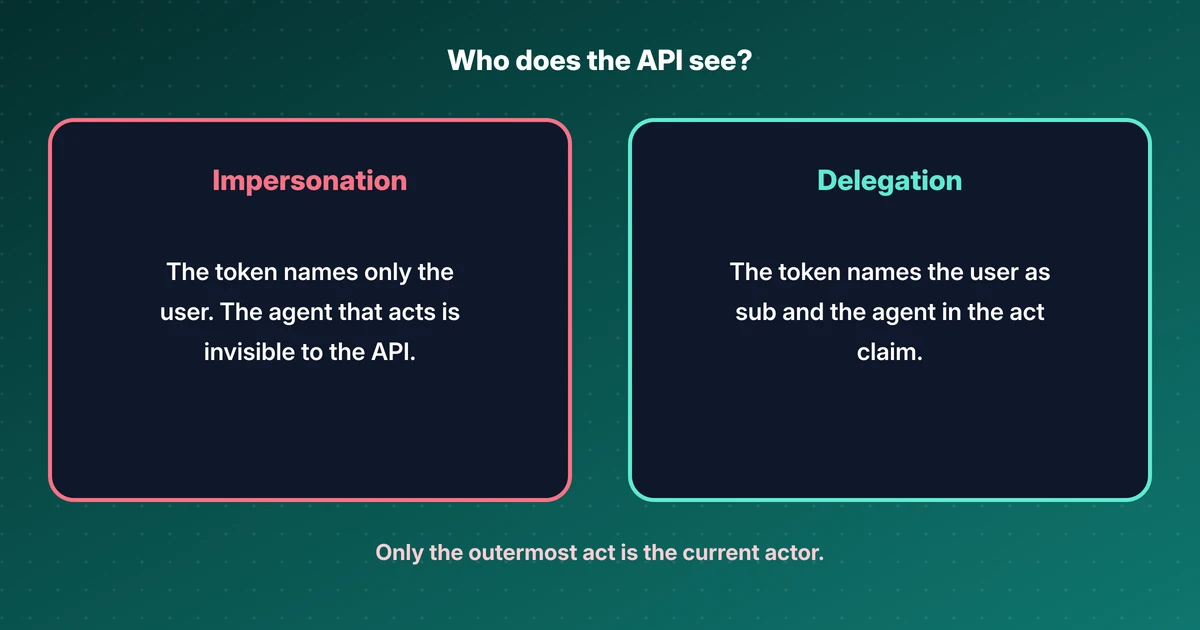
How RFC 8693 token exchange works when an AI agent acts for a user: delegation versus impersonation, the act and may_act claims, and what to check first.
Identity, access, AI agents and DevOps
Notes, lab write-ups and news on identity and access management, AI agents and DevOps. Sources are linked, and labs say what was actually run.
No posts at this depth.
How RFC 8693 token exchange works when an AI agent acts for a user: delegation versus impersonation, the act and may_act claims, and what to check first.
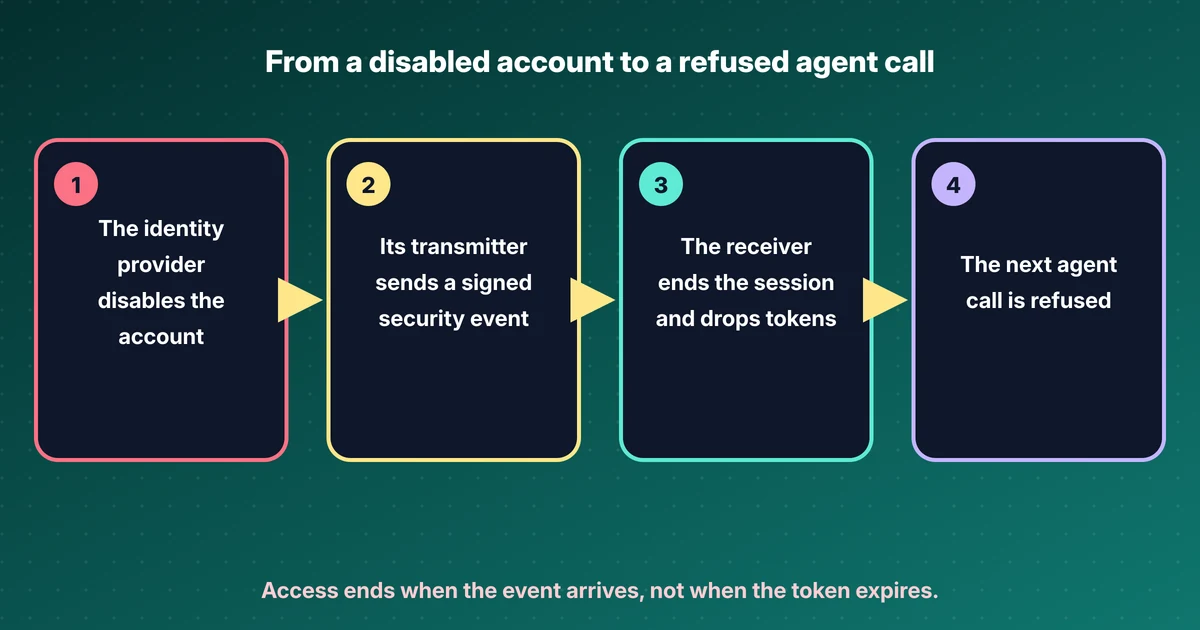
How the OpenID Shared Signals Framework, CAEP and RISC carry session and account changes between systems, and what they mean for AI agents holding tokens.
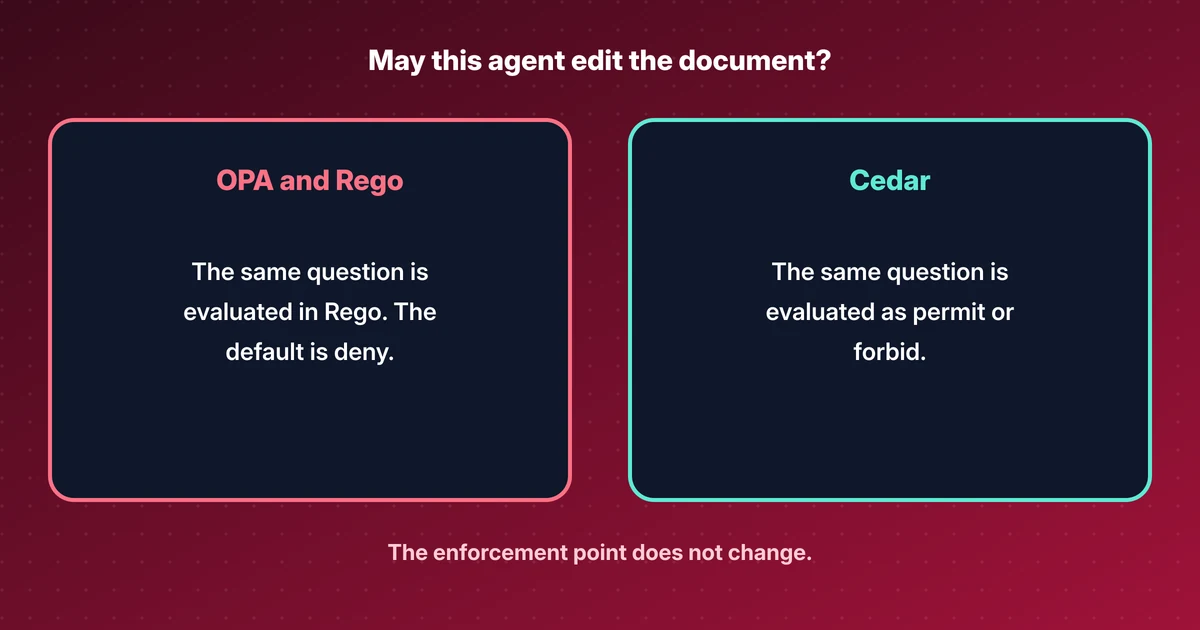
An AI agent wants to edit a contract draft. AuthZEN is the OpenID API for that yes or no. OPA and Cedar can answer, without changing the enforcement point.
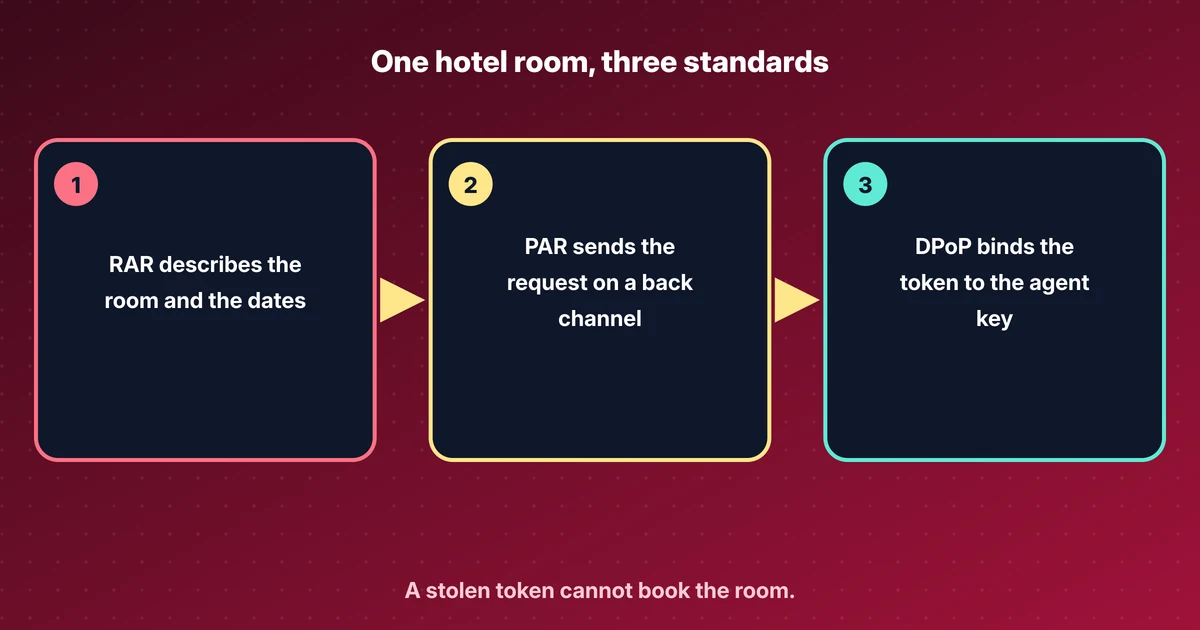
Your AI agent wants to book one hotel room. DPoP, PAR and RAR describe that booking, keep the request off the address bar, and bind the token to a key.
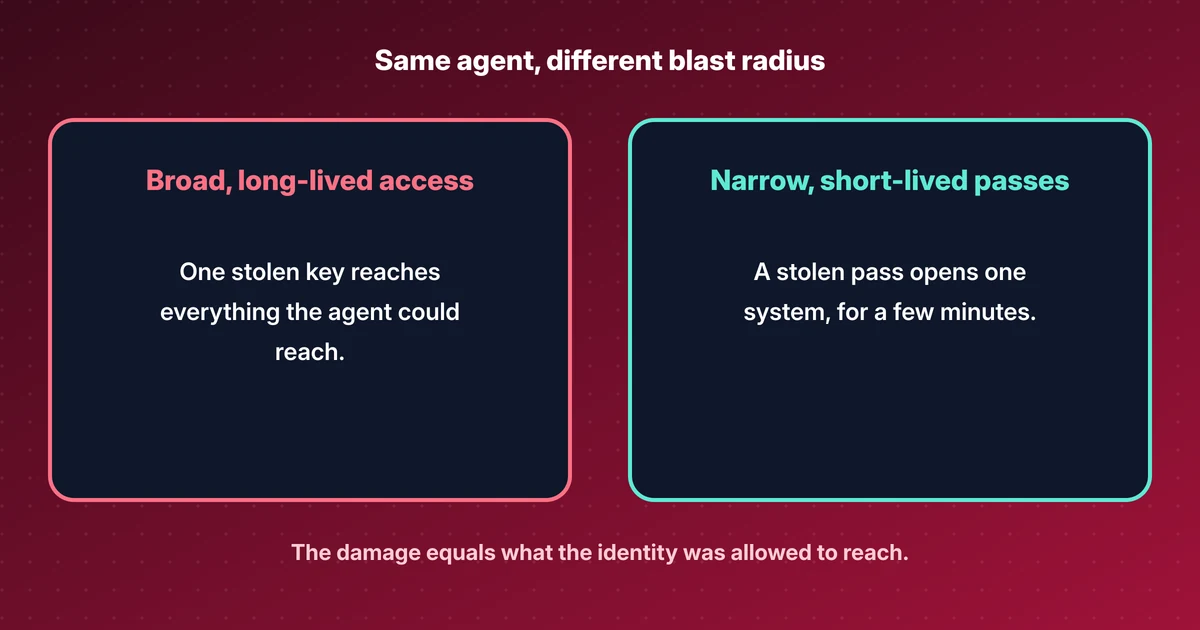
A poisoned Microsoft agent toolkit on 17 November 2026 shows why AI agents need identities of their own. What that means, and five questions a manager can ask.
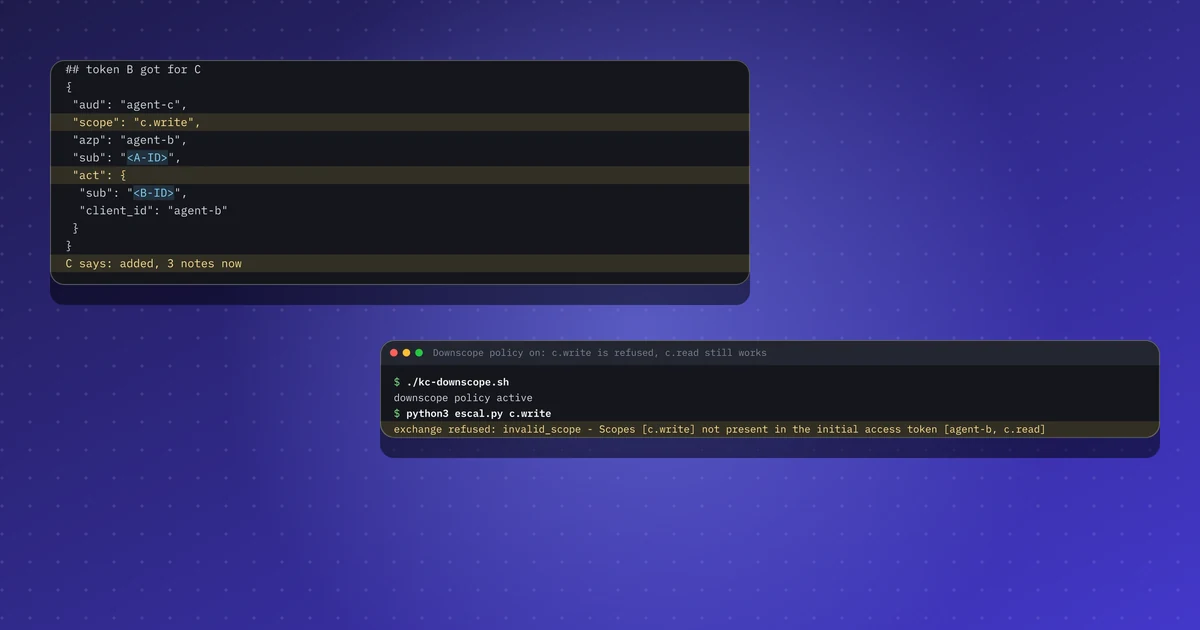
A Keycloak lab for A2A agents: the token B gets for C follows B's own scopes, not A's, unless you enforce downscoping. Stock run, control run and the fix.
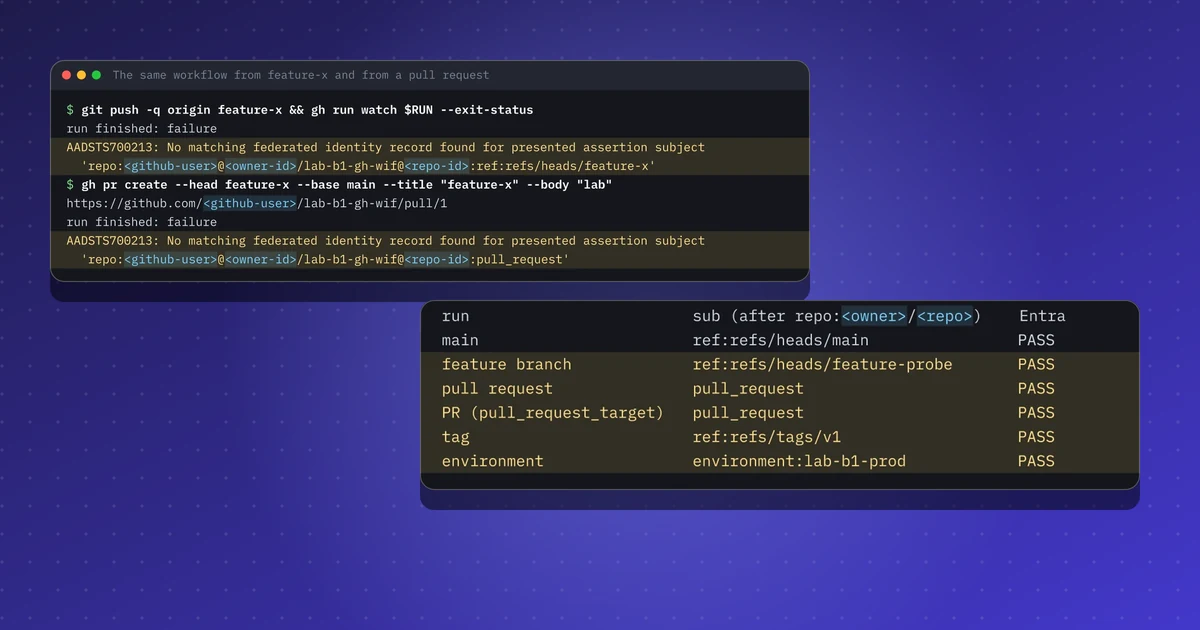
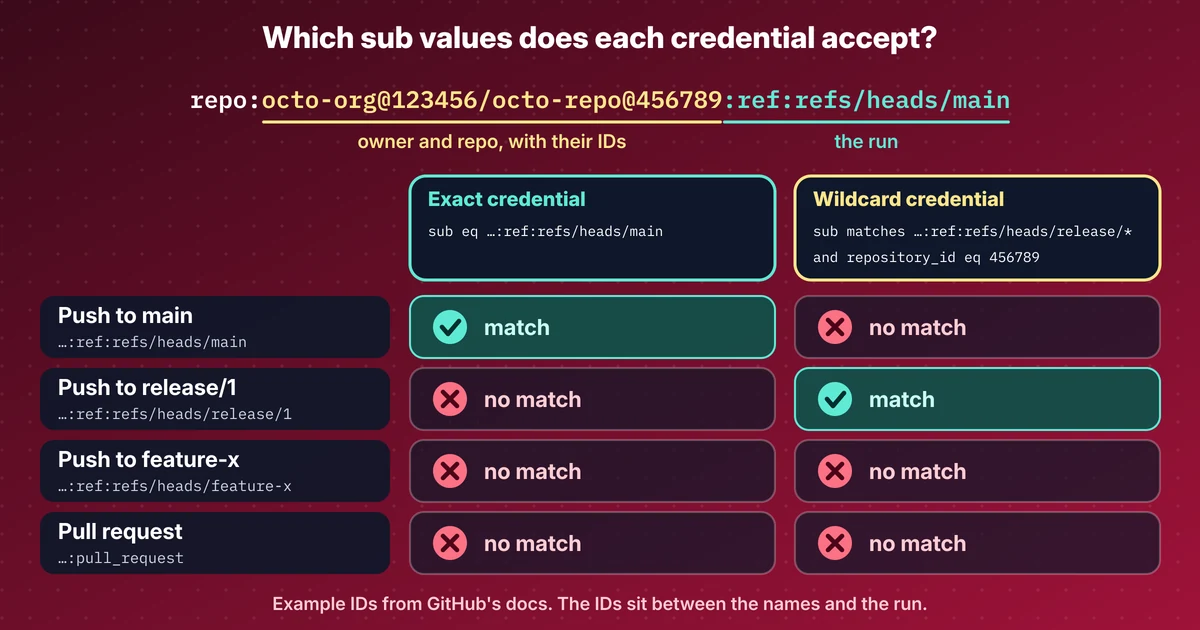
Lab: a GitHub workflow signs in to Azure with no secret. I print the sub of six kinds of run and show which credential lets each one in, pull requests too.
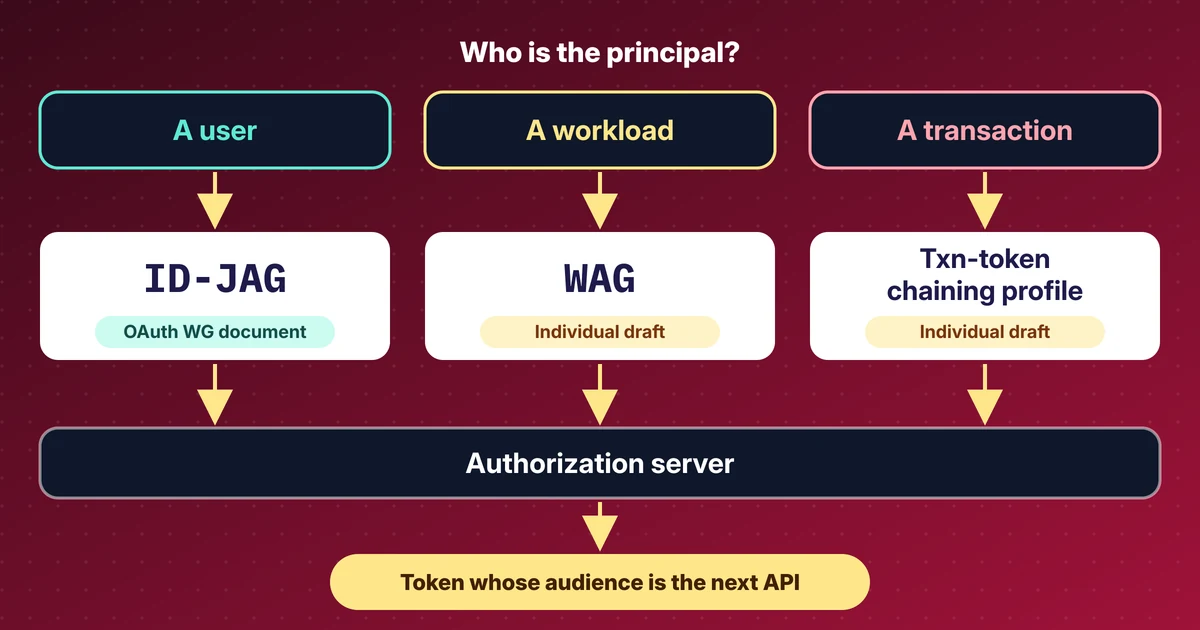
My reading of the IETF 127 OAuth and WIMSE sessions: ID-JAG, the Workload Authorization Grant, transaction tokens and actors, with draft revisions.
GitHub's default OIDC sub now carries owner and repo IDs, Entra wildcard credentials are still in preview, and WorkOS shipped agent auth. Sources and dates.
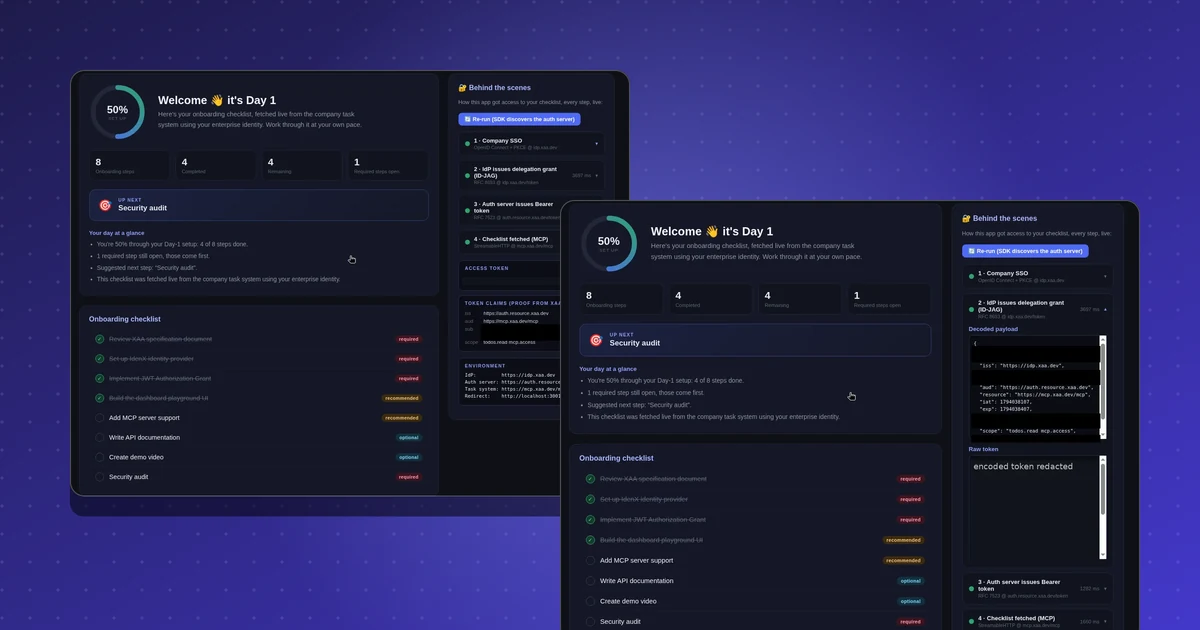
How ID-JAG and Cross App Access let a company's identity provider approve AI agent access to other apps, with lab screenshots and the draft's current status.
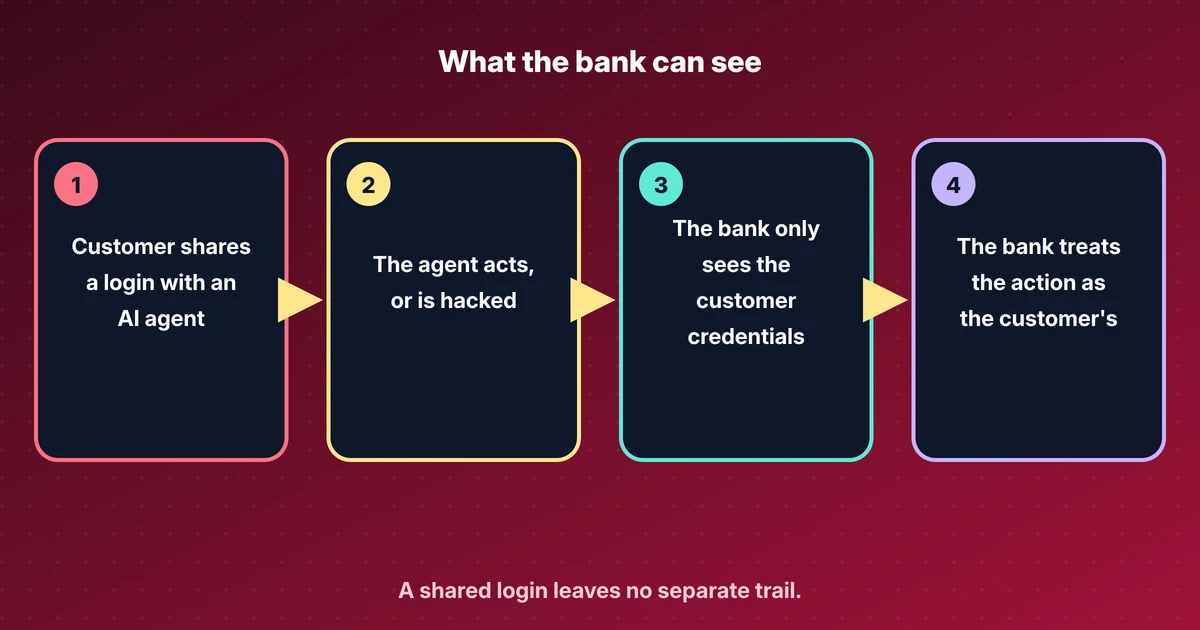
On 18 November 2026 TechCrunch reported that Citi, PNC and other US banks now treat a third-party AI agent's actions as the customer's. What the new terms say.
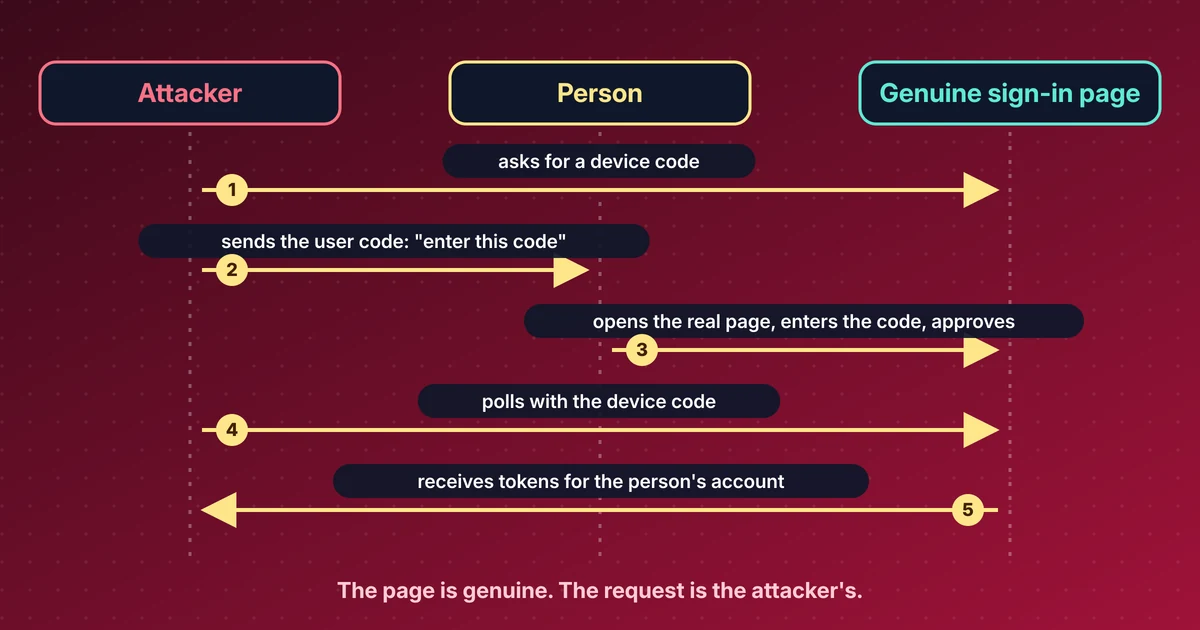
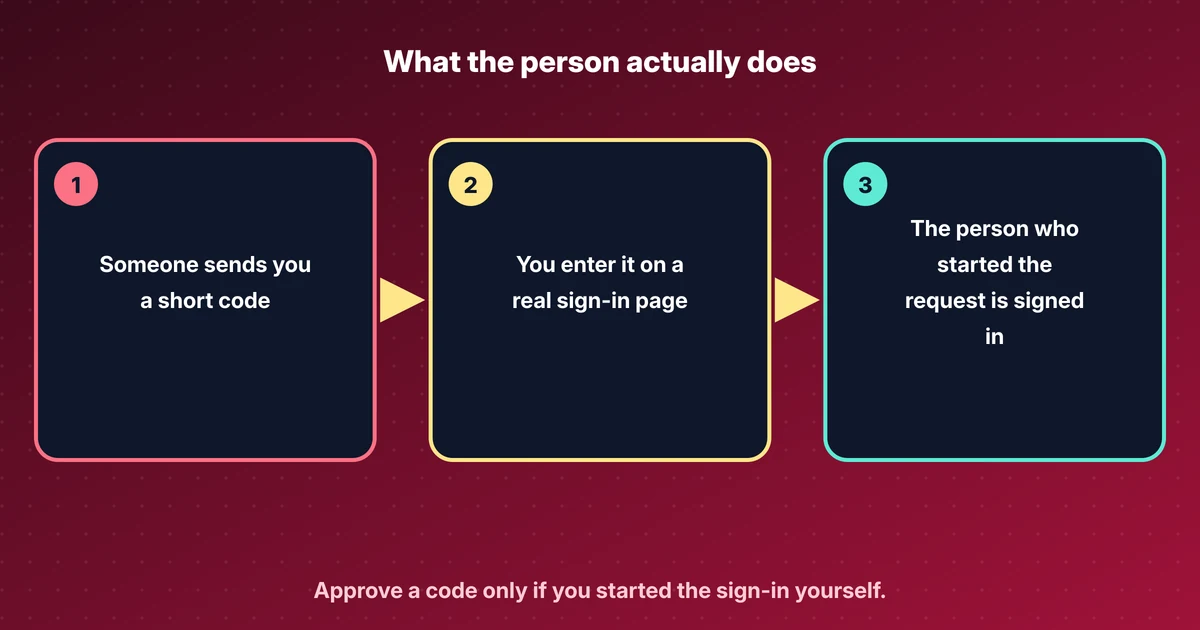
Microsoft researchers showed in a controlled lab that one approved device code could hand an attacker an AI coding assistant session. Risks and mitigations.
On 17 November 2026 Microsoft showed in a lab that one approved device code can hand an attacker an AI coding assistant. What it is, and what to tell staff.
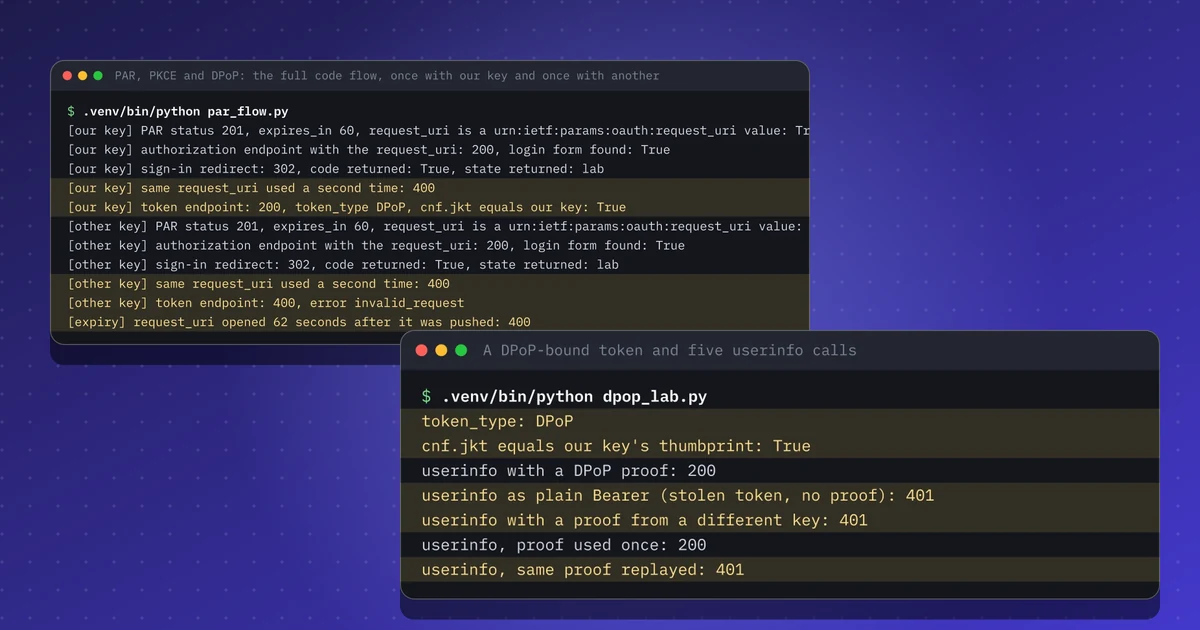
I ran DPoP and PAR against Keycloak 26.8.2. A stolen DPoP-bound token gets a 401, a replayed proof is refused and a pushed request expires after 60 seconds.
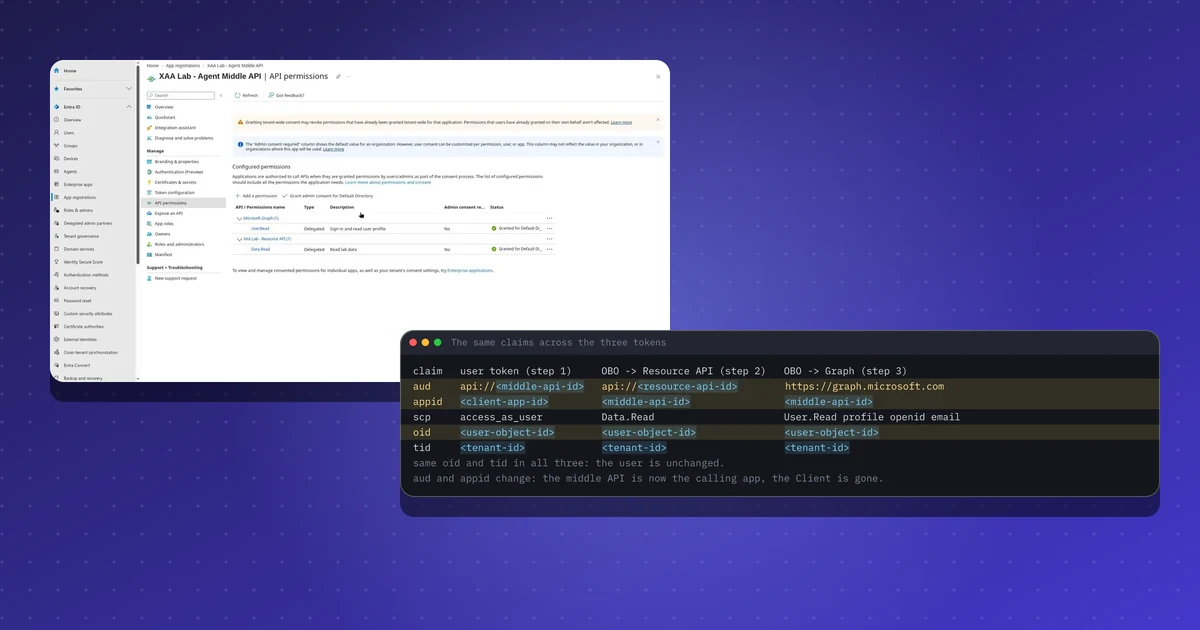
Lab in a test tenant: device-code sign-in, an agent API exchanging the token on-behalf-of with a certificate and no secret, and an unconsented scope failing.
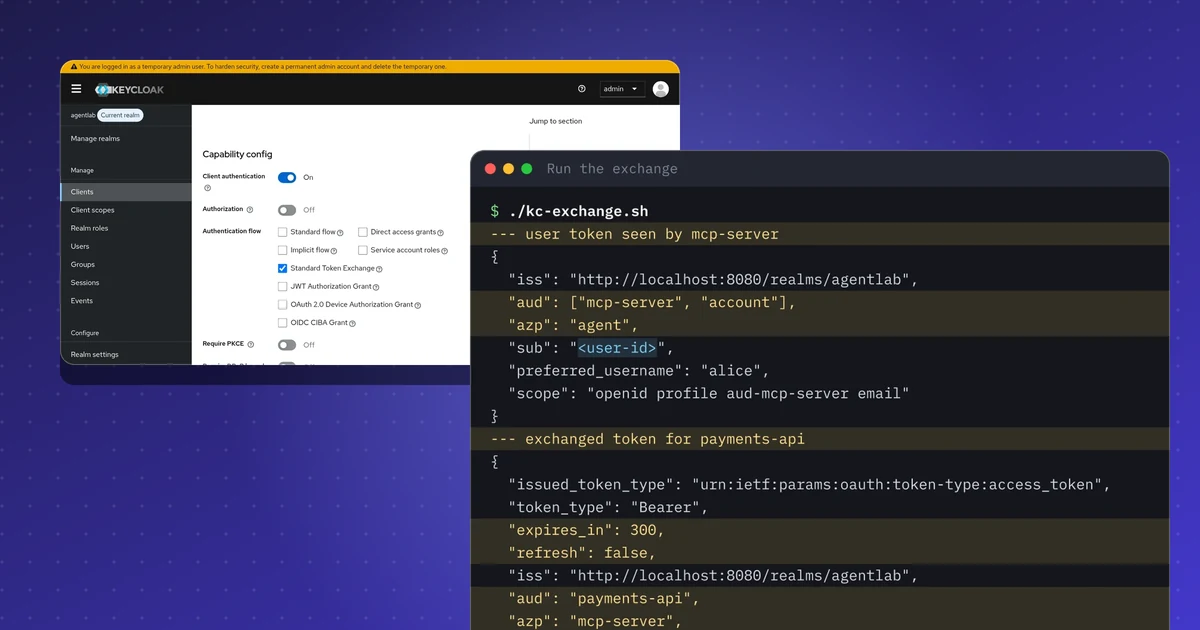
A hands-on lab with Keycloak: an MCP server exchanges a user's token for a narrower one for a downstream API, then three bad exchanges are refused.
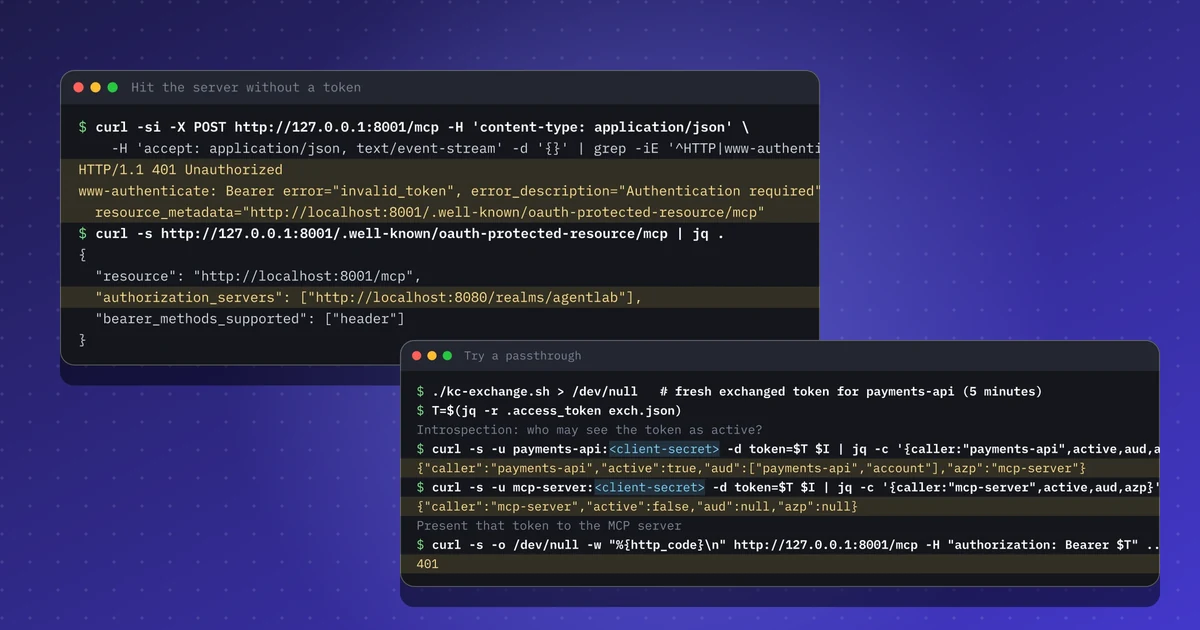
A lab with the official MCP Python SDK and Keycloak: the 401 handshake, audience checks, an RFC 8693 exchange for the payments API, and a refused passthrough.
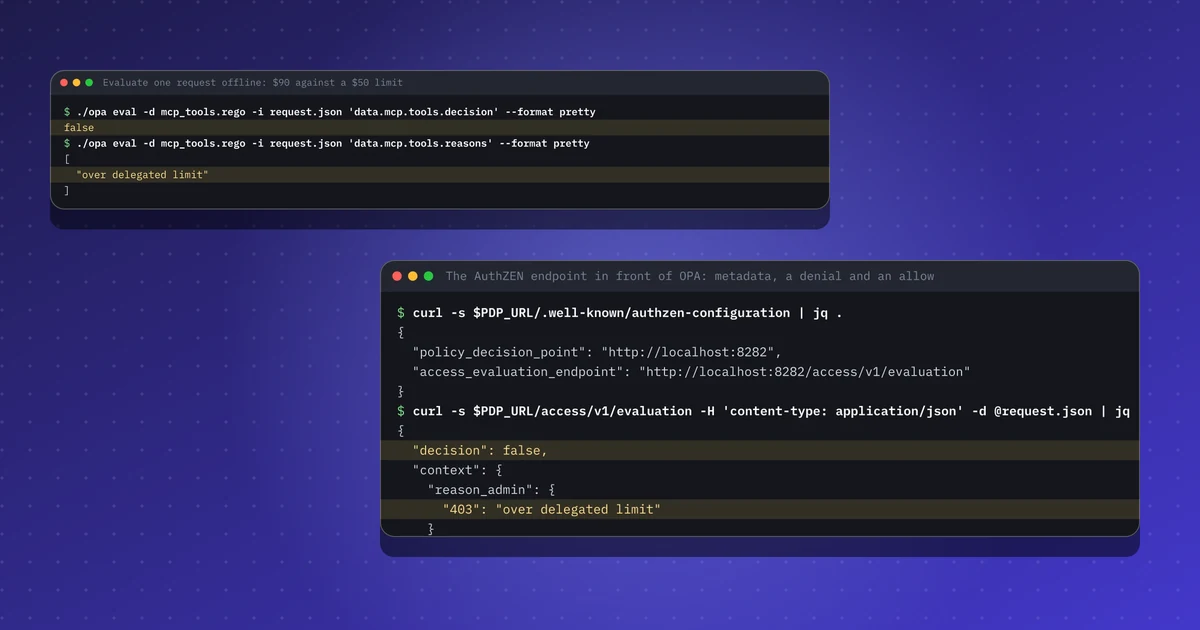
I wrote a Rego policy for MCP tool calls, tested it on OPA 1.22.4 and put an AuthZEN endpoint in front. A $90 payment over a $50 limit is denied with a reason.
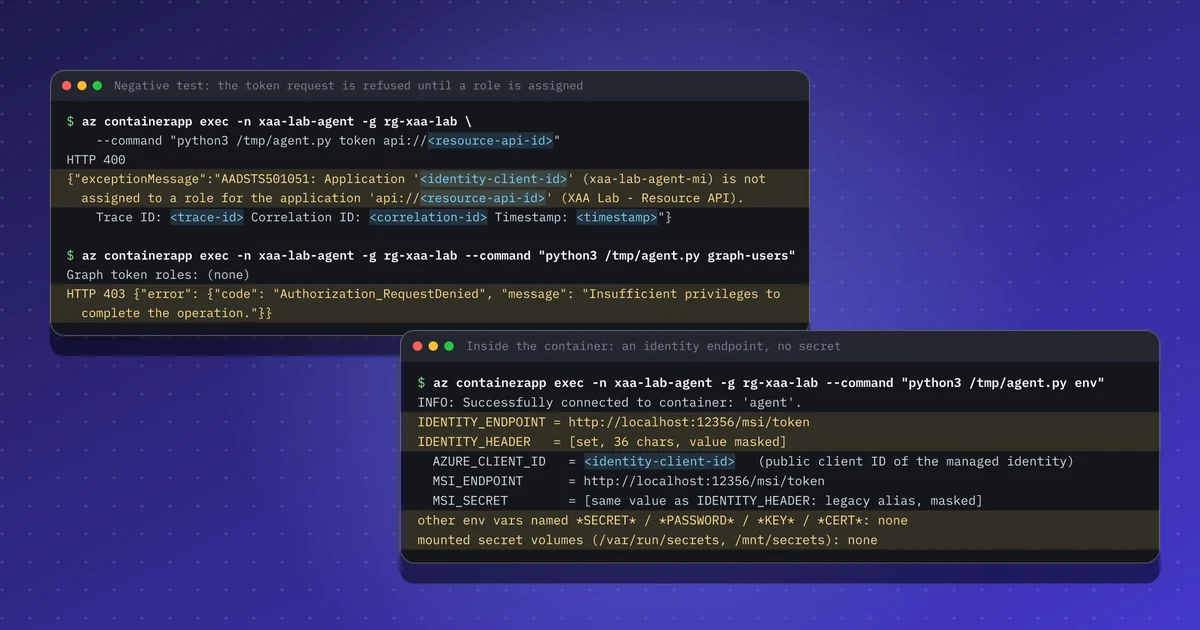
Lab: a Container App agent with a user-assigned managed identity and no secrets gets one narrow app role, receives an app-only token, and the API validates it.